Water leak: what to do before calling a plumber?
The right reflexes to limit the damage before a plumber arrives: turn off the water, secure the area and document the problem.
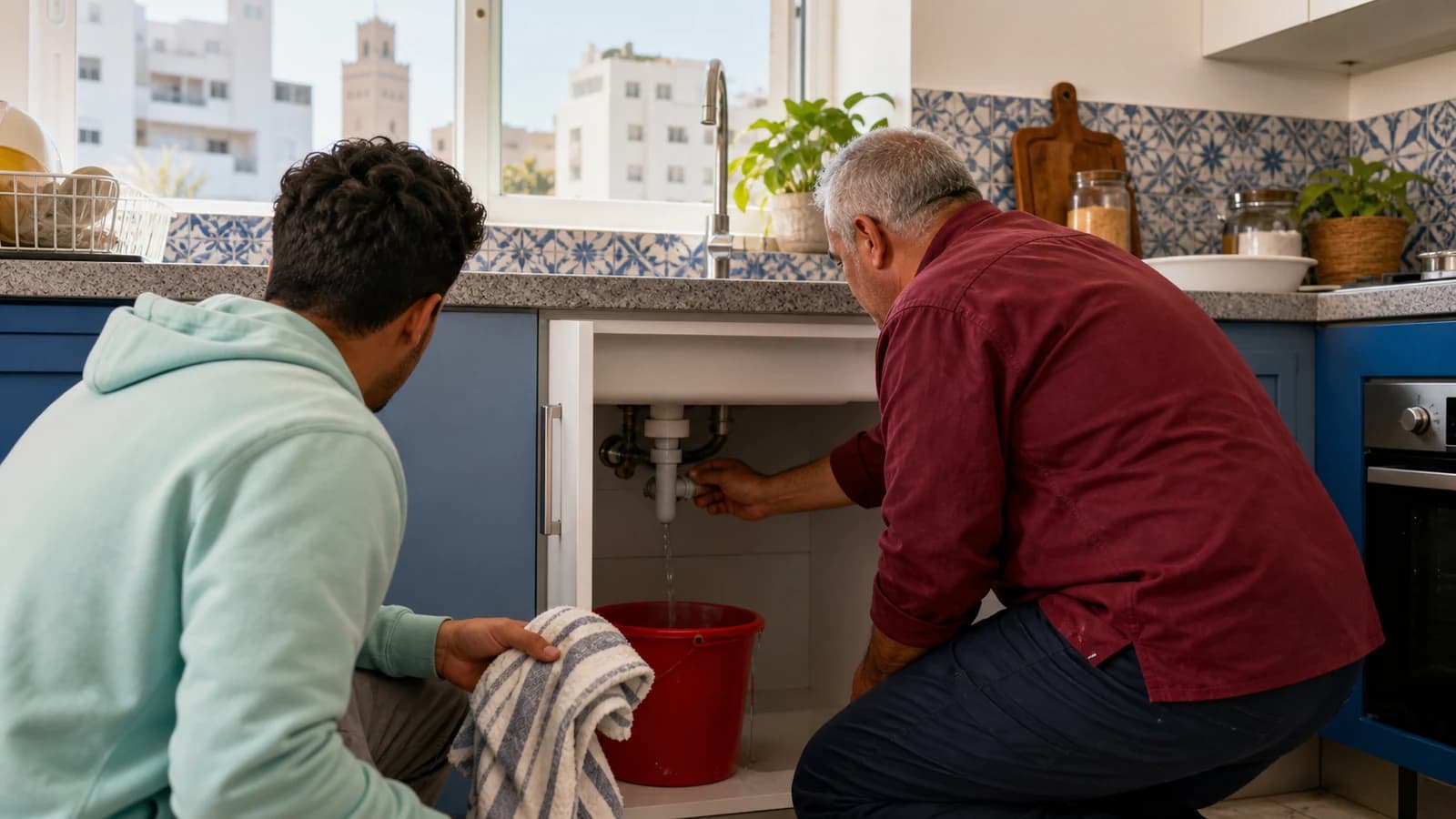
To remember
- Turning off the water is the top priority.
- The photos speed up the plumber's diagnosis.
- For an active leak, choose “As soon as possible”.
What to do right away
A water leak requires a quick reaction, even if it seems small. A few minutes can be enough to damage a piece of furniture, a wall or the neighbor's home. The priority is to limit the flow and secure the electrical elements around the affected area.
- Turn off the local shut-off valve or general water supply.
- Keep electrical appliances away and turn off the power if necessary.
- Place a basin or towel to limit the spread.
Useful information to pass on
Before contacting a plumber, take two or three sharp photos. Show the escape, the environment, and the access. These elements help the service provider to know whether to provide a seal, a hose, a siphon, a specific tool or a more in-depth search.
“As soon as possible” timing or quote: how to choose
If the water is still flowing or you cannot shut off the supply, choose a service with “As soon as possible” timing. If the problem is stable and you want to replace a part or renovate the installation, a quote request is sufficient.
Frequently asked questions
What is the first thing to do in the event of a water leak?
Turn off the water supply if possible, protect nearby electrical outlets, and avoid dismantling the installation if you are unsure.
Does a water leak justify an emergency?
Yes, if the water is still running, if the ceiling is affected, if a room fills up, or if you can't pinpoint the source of the leak.
